


As a leading wholesale manufacturer and supplier of both stevia extract and erythritol, we understand that food, beverage, and supplement brands face a critical choice when selecting natural sweeteners. Both stevia extract (a plant-derived high-potency sweetener) and erythritol (a low-calorie sugar alcohol) offer compelling alternatives to sugar, but their unique properties make them better suited for specific applications. This comprehensive comparison breaks down their differences in sweetness, functionality, health impacts, and use cases-backed by scientific research-to help you choose the right sweetener for your products.
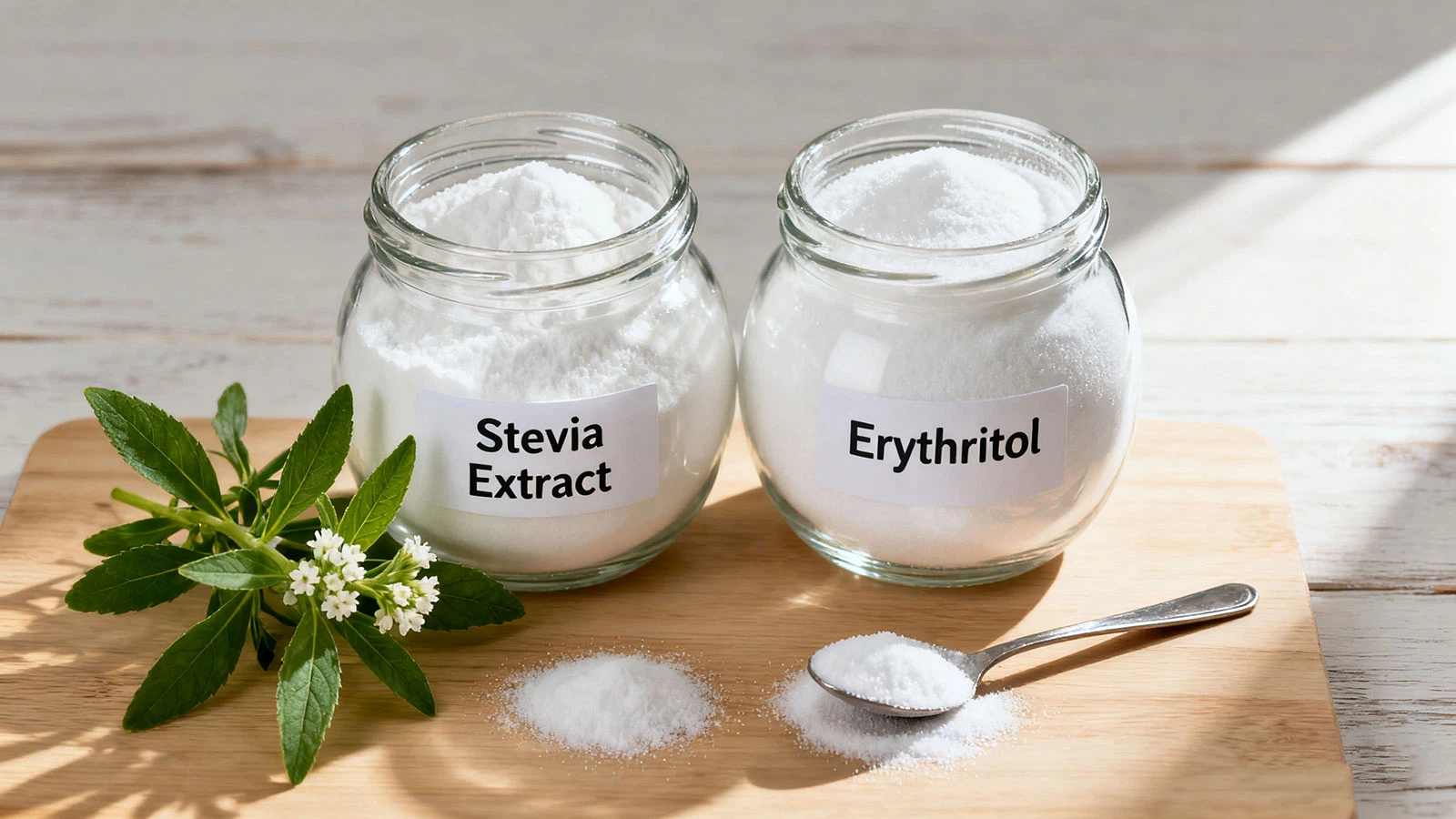
1. Core Properties: Sweetness, Calories, and Origin
Understanding the basic characteristics of stevia extract and erythritol is key to determining their suitability for your formulations.
Stevia Extract: Plant-Derived, Ultra-Sweet
- Origin: Derived from the leaves of the Stevia rebaudiana plant, native to South America. It is processed to isolate steviol glycosides (e.g., rebaudioside A), the compounds responsible for its sweetness.
- Sweetness Intensity: 200–450 times sweeter than sucrose (table sugar). Only small amounts (0.1–0.5% of a formulation) are needed to achieve desired sweetness.
- Calorie Content: Virtually zero calories (≤0.4 kcal/g), as the human body does not metabolize steviol glycosides.
- Taste Profile: Pure, high-quality stevia extract (≥95% steviol glycosides) has a clean, sugar-like taste. Lower-purity extracts may have a mild bitter or licorice aftertaste.
Erythritol: Sugar Alcohol, Mildly Sweet
- Origin: Naturally occurring in fruits (e.g., grapes, melons) and fermented foods (e.g., wine, cheese). Commercially produced via fermentation of glucose.
- Sweetness Intensity: Approximately 60–70% as sweet as sugar. Larger quantities (compared to stevia) are needed to match sugar's sweetness.
- Calorie Content: Very low (0.2 kcal/g), as most is absorbed in the small intestine and excreted unchanged, avoiding caloric uptake.
- Taste Profile: Clean, cool sweetness with no aftertaste. It has a similar mouthfeel to sugar, making it ideal for textural roles in baking.
2. Health and Safety: Digestion, Blood Sugar, and Toxicity
Both sweeteners are generally recognized as safe, but their physiological impacts differ-critical for brands targeting health-conscious consumers.
Blood Sugar and Insulin Response
- Stevia Extract: Does not raise blood glucose or insulin levels, even in people with type 2 diabetes. A 2021 meta-analysis in Nutrients (https://www.mdpi.com/2072-6643/13/11/3965) confirmed that stevia supplementation had no significant effect on HbA1c (a marker of long-term blood sugar control).
- Erythritol: Also has a glycemic index (GI) of 0, meaning it does not spike blood sugar. A 2019 study in Diabetes Care found that erythritol consumption did not affect insulin sensitivity in overweight adults.
Digestive Tolerance
- Stevia Extract: Well-tolerated even in large amounts, with no reported digestive side effects. This is because it is not fermented by gut bacteria.
- Erythritol: Generally digestive-friendly, but excessive intake (≥50g/day) may cause mild bloating or diarrhea in sensitive individuals. Unlike other sugar alcohols (e.g., xylitol, sorbitol), erythritol is absorbed more efficiently, reducing these risks (European Journal of Clinical Nutrition, 2020).
Toxicity and Long-Term Safety
Both sweeteners have earned "generally recognized as safe" (GRAS) status from the FDA and approval from the European Food Safety Authority (EFSA):
- Stevia Extract: EFSA sets an acceptable daily intake (ADI) of 4 mg/kg body weight, though typical consumption is far below this threshold.
- Erythritol: EFSA has not set an ADI, as studies show no adverse effects even at high doses (up to 1g/kg body weight/day) (EFSA Journal, 2011).
3. Functional Performance: Stability, Solubility, and Applications
For manufacturers, a sweetener's functionality-how it behaves in formulations-is as important as its taste or health profile.
Heat and pH Stability
- Stevia Extract: Highly stable under heat (up to 200°C) and a wide pH range (3.0–10.0), making it suitable for baking, pasteurization, and acidic products (e.g., citrus drinks). A 2022 study in Food Chemistry confirmed it retains 90% of its sweetness after baking at 180°C for 30 minutes.
- Erythritol: Also heat-stable (up to 160°C) but may crystallize in high-heat applications like candy making. It is stable in acidic environments but can absorb moisture (hygroscopic) in humid conditions, requiring proper packaging.
Solubility
- Stevia Extract: Soluble in water (up to 30g/L at 20°C), making it ideal for beverages, syrups, and liquid supplements.
- Erythritol: More soluble in water (up to 61g/L at 20°C) than stevia, with excellent dispersion in dry mixes (e.g., protein powders, baking blends).
Best Applications by Industry
| Industry | Ideal for Stevia Extract | Ideal for Erythritol |
|---|---|---|
| Beverages | Carbonated drinks, iced tea, energy drinks (low usage, high sweetness) | Smoothies, protein shakes (adds bulk without calories) |
| Baking | Low-sugar cookies, cakes (blended with bulking agents) | Sugar-free muffins, breads (mimics sugar's texture) |
| Confectionery | Hard candies, chocolates (high sweetness, no aftertaste) | Gummies, mints (cool mouthfeel, no stickiness) |
| Supplements | Liquid vitamins, syrups (masks bitterness) | Powdered supplements (bulk, improves flowability) |
| Oral Care | Toothpaste, mouthwash (no cavity risk) | Sugar-free chewing gum (textural bulk) |
4. Cost and Practicality: Usage Rates and Formulation Tips
For brands balancing performance and cost, understanding usage rates is critical.
- Stevia Extract: Higher upfront cost per kilogram, but its high sweetness intensity (200–450x sugar) means lower total usage. For example, 1kg of stevia extract replaces 200–450kg of sugar, making it cost-effective for high-volume products like sodas.
- Erythritol: Lower cost per kilogram than stevia but requires larger quantities (1.5–2x the amount of sugar) to match sweetness. This makes it more cost-effective for products where bulk (e.g., baking) is important.
Pro Tip: Synergistic Blends
Many brands combine stevia extract and erythritol to leverage their strengths:
- Stevia provides intense sweetness, while erythritol adds bulk and masks any residual aftertaste.
- A 2023 study in Journal of Food Science found that a 1:10 stevia-to-erythritol blend reduced aftertaste by 50% compared to stevia alone, with sweetness equivalent to sugar.
5. Why Choose Our Stevia Extract and Erythritol?
As a wholesale supplier, we offer high-quality stevia extract and erythritol tailored to manufacturer needs:
- Stevia Extract: 98% rebaudioside A (minimal aftertaste), available in powder, liquid, and granular forms. Batch-tested for purity (HPLC) and compliance with FDA/EFSA standards.
- Erythritol: Non-GMO, 99.5% pure, with ultra-fine particle size for superior solubility. Free from heavy metals and microbial contaminants.
- Custom Blends: We create pre-mixed stevia-erythritol blends (e.g., 5% stevia + 95% erythritol) to simplify formulation and reduce production time.
- Technical Support: Our team provides free guidance on usage rates, stability testing, and regulatory compliance for global markets.
Conclusion
Choosing between stevia extract and erythritol depends on your product's needs: stevia extract excels in low-volume, high-sweetness applications (e.g., beverages) where calories and sugar reduction are critical, while erythritol shines in products requiring bulk, texture, or a cool, clean taste (e.g., baked goods, gummies). For many brands, blending the two creates the perfect balance of sweetness, functionality, and cost-efficiency.
As a trusted wholesale supplier, we're here to help you navigate this choice with high-quality, compliant stevia extract and erythritol-plus custom blends to meet your unique needs. Contact us today to request samples, discuss formulations, or get a bulk quote. Let's create sweeter, healthier products together.