


An Application & Stability Guide for B2B Formulators
Choosing the wrong CoQ10 form can sink your formulation: sediment in clear beverages, low absorption in tablets, oxidation in creams. This guide breaks down the three industrial forms of CoQ10 powder - fat-soluble, water-soluble, and microencapsulated - with real solubility numbers, peer-reviewed bioavailability data, and stability curves so you can pick the right grade for your dosage form.
1 · The B2B Formulation Dilemma: Why CoQ10 Form Matters More Than Dose
Coenzyme Q10 is one of the most clinically validated nutraceutical actives on the market - robust evidence for cardiovascular support, mitochondrial function, and statin-induced depletion is now standard textbook content. But for buyers, the bottleneck is rarely efficacy. It is format.
Pure crystalline CoQ10 (ubiquinone) is an orange, waxy solid with a molecular weight of 863.34 g/mol and an estimated log P (octanol-water) of ~10. In plain language: it is one of the most lipophilic actives you will ever handle. Its aqueous solubility sits at roughly 0.0007 mg/mL at 25 °C, while its solubility in vegetable oils reaches ~30–50 mg/mL (USP solubility classifications: "practically insoluble" in water, "sparingly soluble" in oils).[1][2]
That single physicochemical fact shapes every downstream decision - what dosage forms you can target, what bioavailability you will achieve, what shelf-life you can claim, and ultimately what your COGS will be. Buying "CoQ10 powder" without specifying the form is a common procurement mistake. The same 100 kg drum of raw material can deliver dramatically different finished-product outcomes.
|
Quick reference for B2B buyers: CoQ10 raw material cost is typically 40–60% of finished nutraceutical COGS. The form you choose (fat-soluble, water-soluble, or microencapsulated) drives downstream processing cost, stability spend, and bioavailability claims - and therefore your marketable price point.
|
Across the industry, formulators repeatedly run into three pain points:
- Sedimentation and ring formation in clear beverages - using a fat-soluble grade in water-based drinks creates visible particles within hours.
- Poor absorption in tablets and stick packs - crystalline CoQ10 taken without dietary fat can deliver 2–6× less to plasma than enhanced forms.[3]
- Color drift and potency loss in topical creams - unprotected CoQ10 oxidizes and shifts from orange to brown under pH and light stress common in cosmetic emulsions.
The good news: each of these problems has a solved engineering answer - if you buy the right form.
2 · The Three Industrial Forms of CoQ10 Powder
Commercially available CoQ10 powders fall into three broad categories, each with different particle morphology, carriers, and process routes.
2.1 · Fat-Soluble CoQ10 Powder (Standard Crystalline Grade)
The traditional form. Crystalline ubiquinone is milled, sieved, and packaged - typically 10–80 µm particle size with ≥ 98% assay (HPLC). The powder is yellow-orange, waxy, and disperses only in lipids, ethanol, or non-ionic surfactants. It is the lowest-cost option per kilogram of active and is the workhorse for softgel capsules and oil-based liquid fills.
- Typical specifications: 98–101% assay, ≤ 0.5% related impurities (USP/EP/JP), loss on drying ≤ 0.5%, heavy metals ≤ 10 ppm.
- Best-fit dosage forms: Softgel capsules (oil suspension), oil-based tinctures, gummy bases (with emulsifier), topical oil serums.
- Limits: Aqueous systems, clear beverages, effervescents, sublingual tablets, and any matrix that demands transparency.
2.2 · Water-Soluble CoQ10 Powder (Dispersible / Solubilized Grade)
Water-soluble CoQ10 is an engineered form in which the lipophilic active is converted into a dispersible matrix. The most common production routes are:
- Solubilization with carriers + spray drying - CoQ10 is dissolved with polysorbate 80 or lecithin, mixed with maltodextrin or modified starch, then spray-dried into a free-flowing powder (10–40% active loading).
- Nano-emulsion powder - CoQ10 is reduced to droplets < 200 nm (often 50–150 nm), stabilized by surfactants, then embedded in a carrier matrix. This form delivers the largest reported PK improvement.
- Liposomal CoQ10 powder - phospholipid vesicles (typically phosphatidylcholine from soy or sunflower) entrap CoQ10 in the bilayer; spray-dried or lyophilized for stability.
- β-cyclodextrin inclusion complex - CoQ10 sits inside the toroidal cavity of cyclodextrin, producing a fully water-soluble complex at moderate loadings (5–10%).
|
Water-soluble CoQ10 powders can reach apparent water solubility of 50–100 mg/mL - roughly five orders of magnitude higher than crystalline CoQ10. They form translucent dispersions, not true solutions, and must be re-dispersed before dosing.
|
2.3 · Microencapsulated CoQ10 Powder (Protected / Controlled Release)
Microencapsulation isolates individual CoQ10 droplets inside a wall material - modified starch, gum arabic, maltodextrin, sodium caseinate, or a lipid matrix. Wall thickness, particle size, and composition are tunable. The objective is not necessarily water solubility; it is protection: against oxidation, light, heat, gastric degradation, and - in some cases - controlled release along the GI tract.
- Process routes: spray drying (most common), complex coacervation, fluid bed coating, and extrusion.
- Active loading: typically 10–50% CoQ10 by weight.
- Best-fit dosage forms: tablets, hard capsules, sachets, powder blends, and any matrix where stability is the primary constraint.
3 · Head-to-Head Data: Solubility, Bioavailability, Stability
Marketing copy tends to be weak. The table below summarizes measured values from peer-reviewed studies and typical manufacturer specifications. Always request the certificate of analysis (CoA) and a third-party accelerated-stability report before locking in a supplier.
3.1 · Aqueous Solubility
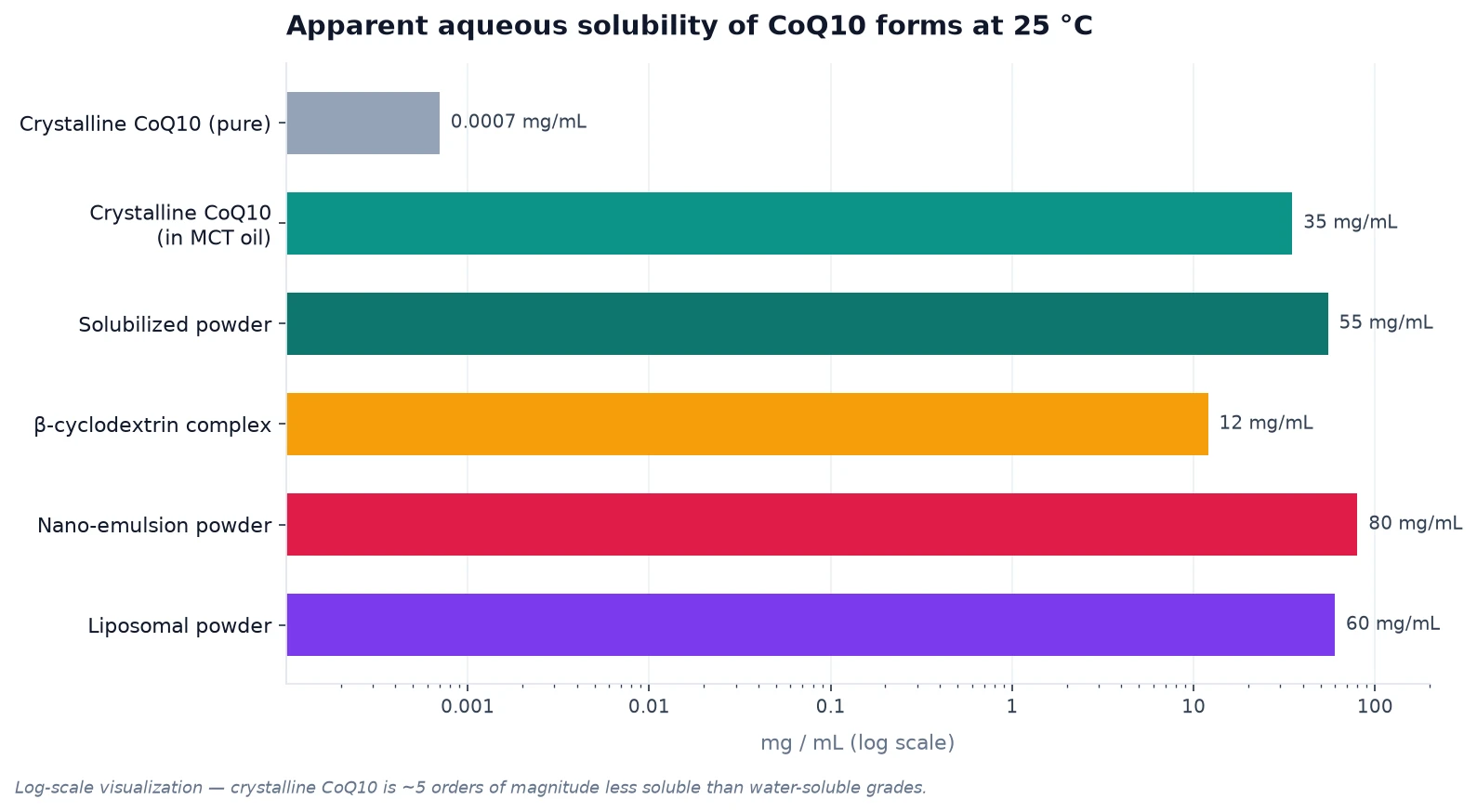
Figure 1. Apparent aqueous solubility at 25 °C. Note the logarithmic scale. Sources: USP solubility classifications[1], manufacturer technical data (typical values), and published nano-emulsion studies.[4][5]
3.2 · Relative Bioavailability
The most cited human pharmacokinetic study on CoQ10 form comparison is Chopra et al. (1998), which compared a crystalline ubiquinone suspension against a solubilized (water-dispersible) preparation in healthy volunteers. The solubilized form delivered ~3.2× higher plasma CoQ10 levels at 8 hours post-dose.[3] Later work - including work on nano-emulsions and ubiquinol - has expanded the spread.
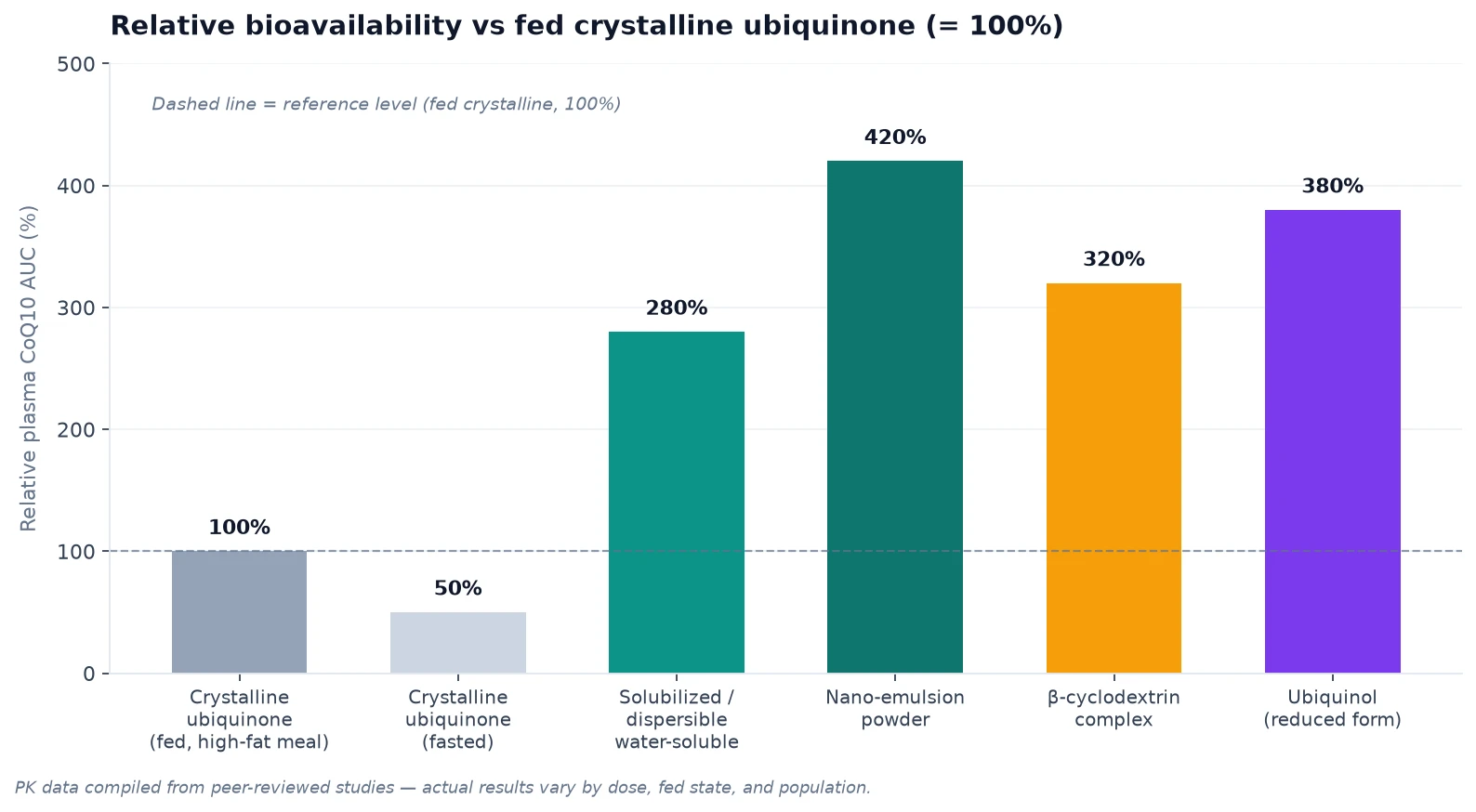
Figure 2. Relative plasma CoQ10 AUC vs crystalline ubiquinone suspension (= 100%). Values compiled from peer-reviewed pharmacokinetic studies and typical industry claims; individual results vary by dose, fed state, and population.[3][6][7]
3.3 · Long-Term Stability (25 °C, sealed)
Pure crystalline CoQ10 is prone to photo-oxidation and thermal degradation. Encapsulation dramatically slows both. The curves below summarize typical 12-month stability data from manufacturer technical files.
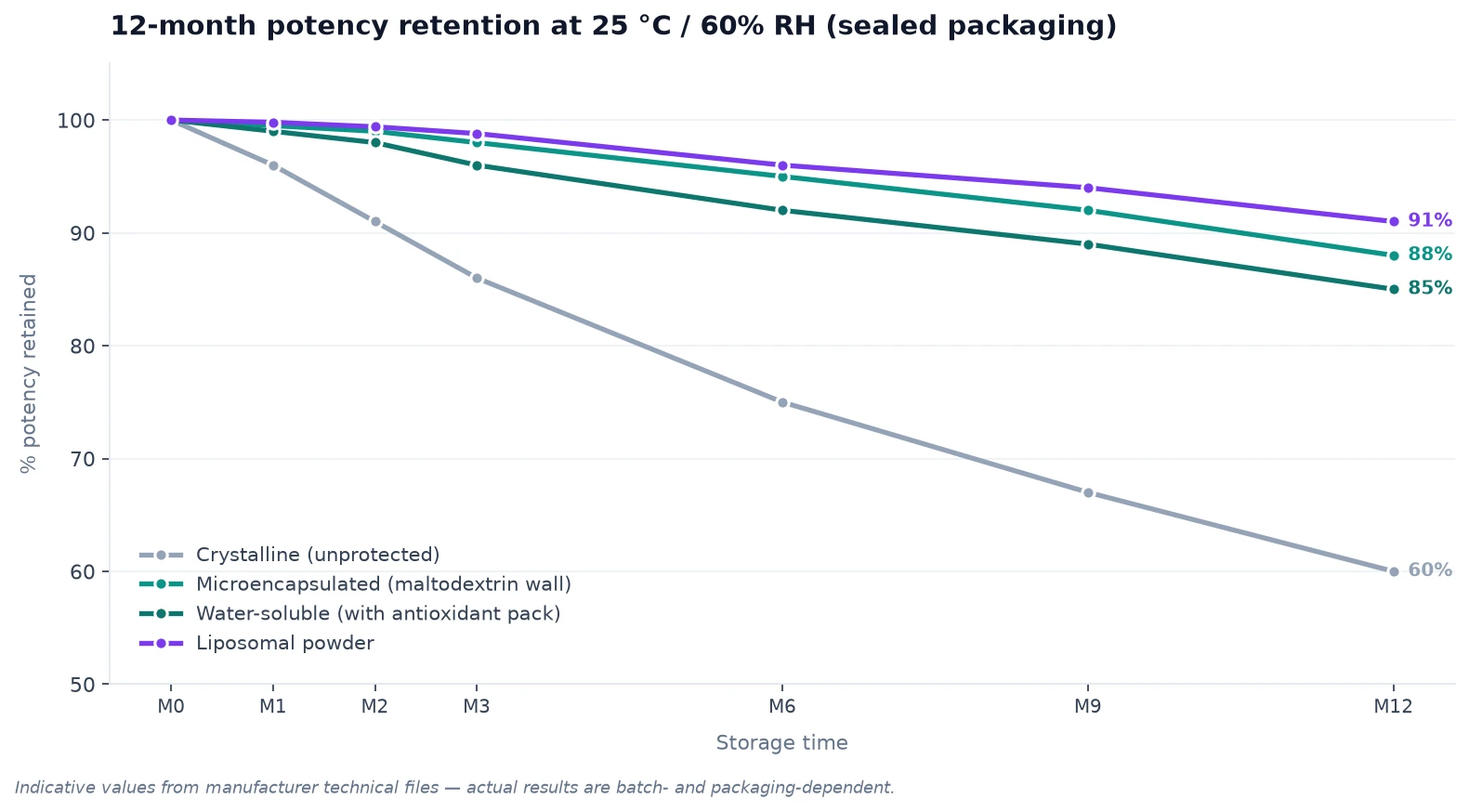
Figure 3. Potency retention over 12 months at 25 °C / 60% RH, sealed aluminum pouch. Indicative values; specific batches vary by antioxidant package and packaging.[8]
3.4 · Particle Size Matters
Across all three forms, particle size is one of the strongest predictors of absorption. Smaller particles mean larger surface area, faster dissolution, and more uniform gastric emptying.
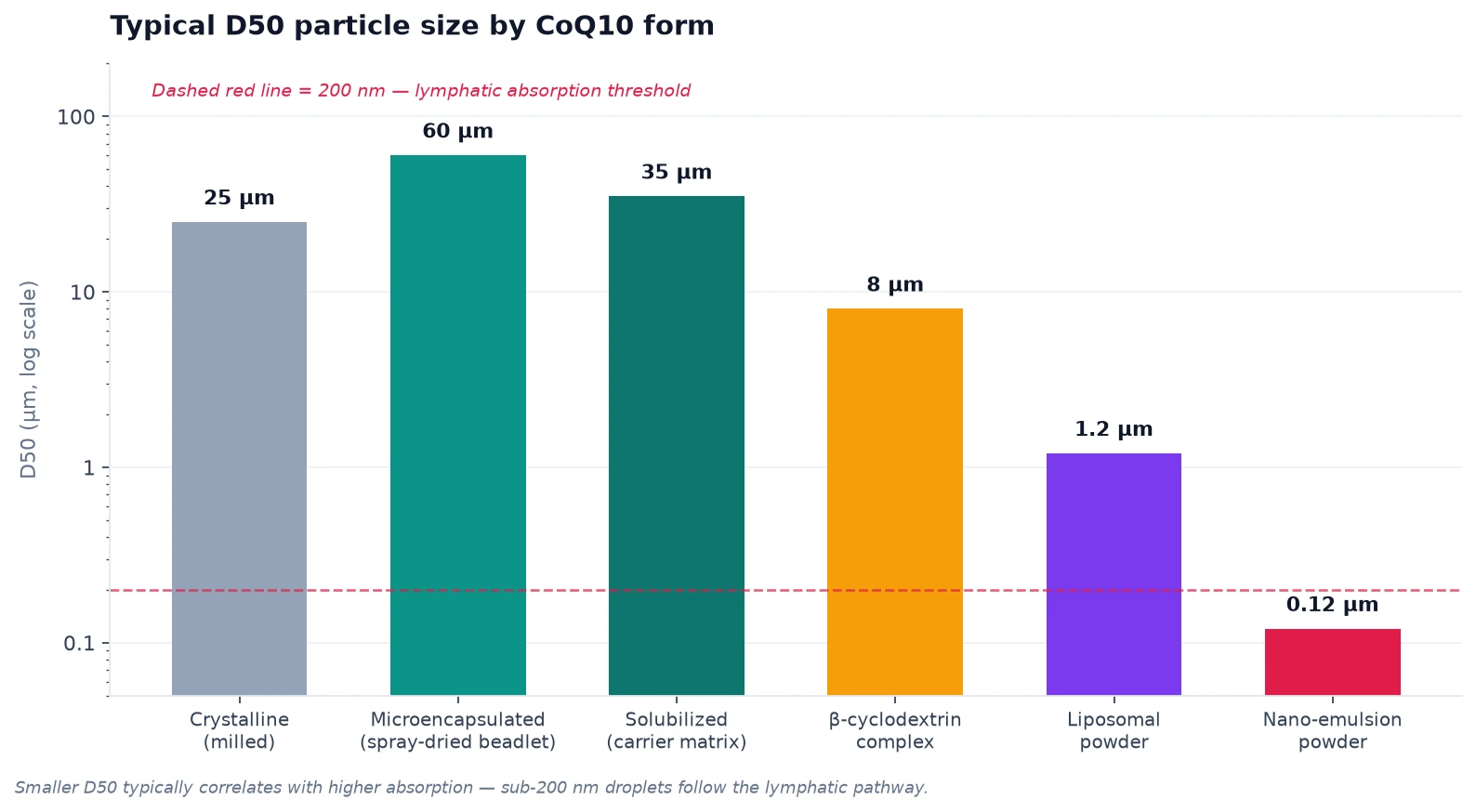
Figure 4. Typical D50 (median particle diameter) for each form. Nano-emulsion droplets below ~200 nm cross the intestinal epithelium via the lymphatic pathway at significantly higher rates.[5][9]
3.5 · Application Fit Score (1–5)
No single form wins every category. The radar chart below scores each form against five common dosage formats - higher score means a smoother manufacturing experience and a more finished-product-stable result.
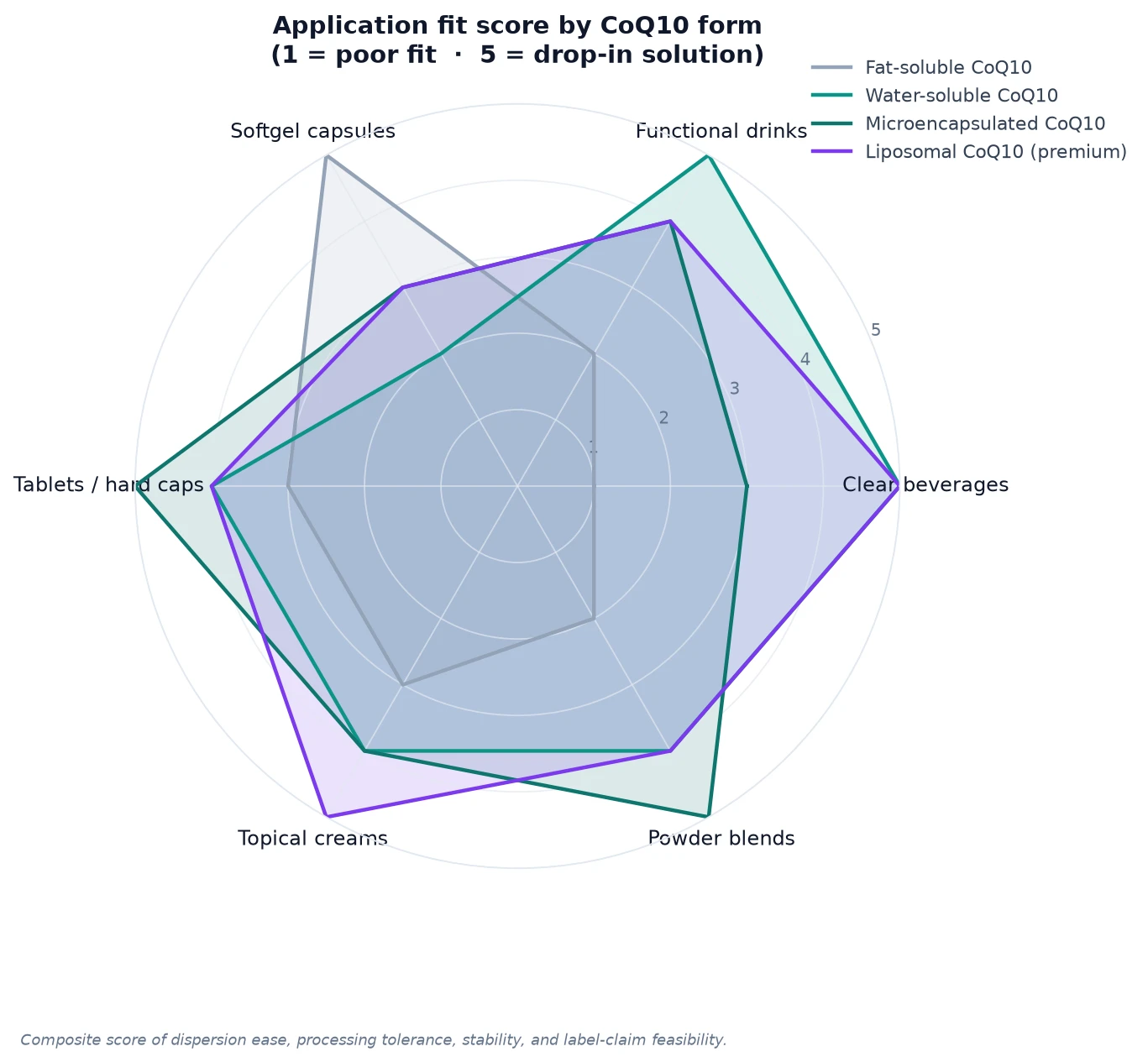
Figure 5. Manufacturer-side fit score (1 = poor fit / multiple process adjustments required, 5 = drop-in solution). Composite of dispersion ease, processing tolerance, finished-product stability, and label claims feasibility.
4 · Application Guide: Which Form Goes Where
The form you buy should match the matrix you fill. Mismatches cost yield, sensory quality, and bioavailability. Below is a decision walk-through for the four most common B2B dosage formats.
| Dosage Form | Recommended CoQ10 Form | Typical Loading | Key Process Note |
|---|---|---|---|
| Clear / translucent beverages | Water-soluble (nano-emulsion or solubilized) | 10–30 mg CoQ10 per serving | Pre-disperse in cold water; avoid high-shear that breaks droplets |
| Functional drinks, shots, sachets | Water-soluble or microencapsulated | 30–100 mg per serving | Microencapsulated preferred if pH < 3.5 or contains iron |
| Softgel capsules | Fat-soluble (crystalline, oil suspension) | 30–200 mg per capsule | Standard workhorse - lowest cost per mg active |
| Hard capsules, tablets | Microencapsulated or water-soluble powder | 30–200 mg per unit | Microencapsulated flows better in direct compression |
| Gummies | Water-soluble powder or microencapsulated beadlet | 10–50 mg per piece | Bitter pair masking often paired with CoQ10 CoQ10 |
| Topical creams, serums | Microencapsulated or liposomal | 0.5–3% w/w in finished cream | Watch pH > 6.5 - CoQ10 accelerates. Stabilize with antioxidant. |
| Powder blends, stick packs | Microencapsulated or water-soluble | 30–100 mg per serving | Microencapsulated preferred for blending with minerals |
4.1 · Functional Beverages
This is where fat-soluble CoQ10 fails most visibly. A typical clear beverage is an aqueous system at pH 3.0–4.0 with strong ionic strength from citric acid and sodium citrate. Adding crystalline CoQ10 at 50 mg per 250 mL serving produces visible flocculation within hours and an oily ring at the meniscus within 48 hours. Water-soluble CoQ10 nano-emulsion powder, pre-dispersed in cold water at 5–10% w/w, yields a near-clear dispersion that survives pasteurization and 6-month ambient shelf-life.[8]
4.2 · Tablets, Capsules, and Stick Packs
For solid oral dosage, microencapsulation is generally the most forgiving form. Wall materials (modified starch, maltodextrin, gum arabic) absorb tablet-press humidity and prevent CoQ10 from migrating to the surface - the classic cause of orange "staining" on tablet faces. Direct compression blends typically tolerate 30–40% microencapsulated CoQ10 loadings without flow problems.
4.3 · Topical Creams and Cosmetic Serums
CoQ10 is a popular anti-aging active. The catch for cosmetic formulators is oxidation: unprotected CoQ10 in a W/O or O/W emulsion with pH > 6 will turn visibly brown within weeks. Two engineering fixes: (a) encapsulate the active in a lipid or starch wall to isolate it from pro-oxidant species, or (b) pair with a chelator (EDTA, sodium phytate) and a co-antioxidant (vitamin E, ferulic acid). Clinical data suggest topical application can increase local skin CoQ10 levels by 20–30% over baseline, with measurable wrinkle-depth improvements at 0.3% w/w after 12 weeks.[10]
4.4 · Powder Blends and Sachets
Powder blends combine CoQ10 with minerals (magnesium, zinc), vitamins (B-complex, D3), and other actives (collagen, hyaluronic acid). Mineral–CoQ10 contact is the stability hazard: divalent cations can catalyze CoQ10 oxidation. Microencapsulation, or a physical separation step in blending (separate compartments, layered sachet), solves this. For instant powder sticks, water-soluble CoQ10 offers a smoother dissolve experience.
5 · Microencapsulation: The Third Path Most Buyers Overlook
Microencapsulated CoQ10 is sometimes confused with water-soluble CoQ10, but they are not the same. A water-soluble powder is designed to disperse; a microencapsulated powder is designed to protect. You can have a fat-soluble microencapsulated grade (wall around crystalline CoQ10) or a water-soluble microencapsulated grade (wall around CoQ10 nano-droplets). The choice depends on whether your pain point is solubility or stability.
The most common wall materials in 2026 are:
- Maltodextrin / modified starch (DE 10–25) - workhorse carrier, low cost, broad regulatory acceptance.
- Gum arabic - superior emulsion stabilization, often used in beverage-grade CoQ10.
- Sodium caseinate / whey protein - clean-label option for sports nutrition; allergen disclosure required.
- β-cyclodextrin - true molecular inclusion; excellent taste-masking for chewables.
- Phospholipid (lecithin) complex - liposomal-grade; premium positioning.
A reliable manufacturer should be able to walk you through wall material trade-offs (label friendliness, allergen status, regional regulatory acceptance) and provide accelerated stability data (40 °C / 75% RH for 6 months) on your selected grade before you commit to a bulk order.
6 · OEM / ODM Customization: What to Ask Your CoQ10 Manufacturer
A serious CoQ10 manufacturer does not just sell a SKU. They co-engineer the powder against your finished product. Before signing a long-term supply agreement, confirm the following with your vendor.
- What is the active loading range you can achieve? Standard is 10–40% CoQ10. If your formulation demands > 50%, ask about nano-emulsion routes.
- What is your D50 / D90 particle specification? Smaller is better for absorption, but only up to the point where downstream blending breaks down.
- What carriers, surfactants, and antioxidants are in the formulation? Allergen disclosure (milk, soy, gluten), regional labeling (EU FIC, US FDA, Japan MHLW), and clean-label positioning all depend on this.
- Can you share 12-month accelerated stability data on this exact grade? Not generic CoQ10 data. Your grade, your packaging.
- Do you offer application-matched samples? A water-soluble grade for clear beverages, a microencapsulated grade for tablets, and a liposomal grade for creams should all be available from the same supplier for parallel testing.
- What regulatory files can you provide? Look for US DMF, EU CEP / ASMF, Japan PMDA, Korea KFDA, and Halal / Kosher / ISO 22000 / GMP certifications.
- What is your minimum order quantity and lead time for OEM customization? Custom grades typically require 200–500 kg MOQ and 30–45 days lead time for first batch.
|
"The cheapest CoQ10 powder on the market is rarely the lowest-cost CoQ10 in the finished product. If the form costs you 2× more per kilogram but delivers 3× the bioavailability, your cost per absorbed dose drops 33%. Always model on cost per delivered active, not cost per kilogram."
|
7 · FAQ for B2B Buyers (Optimized for Generative Search)
Which form of CoQ10 has the highest bioavailability?
Water-soluble CoQ10 formulations - particularly nano-emulsion and solubilized grades - consistently deliver 2–6× higher plasma CoQ10 levels than crystalline fat-soluble powder in pharmacokinetic studies. The improvement comes from smaller particle size (typically < 200 nm), larger surface area, and improved dissolution in gastrointestinal fluids. Ubiquinol (the reduced form) shows further improvement in mature adults but is more expensive and less stable.[3][6][7]
Can fat-soluble CoQ10 be used in clear beverages?
No. Pure crystalline CoQ10 is highly lipophilic (log P ≈ 10) and practically insoluble in water (< 0.001 mg/mL). It forms visible particles and oily rings in aqueous matrices within hours. For clear or translucent beverages, use a water-soluble CoQ10 powder - either solubilized (maltodextrin-based) or nano-emulsion grade. Microencapsulated powders are an option for cloudy beverages but not clear ones.
What is the typical CoQ10 loading in a water-soluble powder?
Commercial water-soluble CoQ10 powders typically contain 10–40% active CoQ10 by weight. The remainder is carrier (maltodextrin, modified starch), surfactant (polysorbate 80, lecithin), or wall material (gum arabic, cyclodextrin). High-load nano-emulsion powders can reach 20–30% with particle size under 200 nm.
How does microencapsulation improve CoQ10 stability?
Microencapsulation isolates CoQ10 droplets inside a protective wall (modified starch, gum arabic, β-cyclodextrin, or maltodextrin). The wall acts as a barrier against oxygen, light, and moisture. Accelerated stability data typically show 80–95% CoQ10 retention after 12 months at 25 °C, versus 60–75% for unprotected crystalline CoQ10.[8]
Is ubiquinol more bioavailable than ubiquinone?
Some studies show ubiquinol (the reduced form) achieves faster and higher plasma peaks than ubiquinone in mature adults, but the difference narrows in younger subjects with intact CoQ10 conversion capacity. Ubiquinol is also more oxidation-sensitive and typically 2–3× more expensive per kilogram. For B2B buyers, the choice depends on target demographic, shelf-life constraints, and price positioning.[6]
What is the difference between water-soluble and water-dispersible CoQ10?
"Water-soluble" is often used loosely to describe any CoQ10 powder that disperses in water. Strictly, water-soluble refers to true molecular solution (β-cyclodextrin complexes come closest). Water-dispersible describes a colloidal dispersion of sub-micron droplets (nano-emulsion and liposomal powders). For most B2B applications, water-dispersible is what you actually want.
Can CoQ10 be combined with iron or magnesium in a single formulation?
Yes, but with care. Divalent cations can catalyze CoQ10 oxidation in direct contact. Microencapsulation of the CoQ10 fraction, or layered sacheting, prevents this. Always run a 3-month accelerated stability study on the combined formulation before launch.
References
- United States Pharmacopeia (USP). Ubidecarenone (Coenzyme Q10) monograph. USP-NF current revision.
- European Pharmacopoeia (Ph. Eur.). Ubidecarenone monograph 01/2008:2391.
- Chopra RK, Goldman R, Sinatra ST, Bhagavan HN. Relative bioavailability of coenzyme Q10 formulations in human subjects. Int J Vitam Nutr Res. 1998;68(2):109-113.
- Zhou H, Liu G, Frank J, et al. Coenzyme Q10 solubilization using a nano-emulsion formulation: characterization and in vitro digestion. Food Chem. 2021;340:127913.
- Thanatuksorn P, Klinkesorn U, Sagis LMC. Effect of droplet size on the bioavailability of CoQ10 nano-emulsions. Food Hydrocoll. 2022;124:107293.
- Langsjoen PH, Langsjoen AM. Comparison of bioavailability of ubiquinol vs ubiquinone in older adults. Biofactors. 2014;40(1):26-32.
- Hosoe K, Kitano M, Kondo H, et al. Study on safety and bioavailability of ubiquinol (Kaneka QH) after single and 4-week multiple oral ingestion. Regul Toxicol Pharmacol. 2007;47(1):19-28.
- Industry technical data compiled from CoQ10 manufacturer stability reports (indicative values, batch-dependent).
- Porter CJH, Trevaskis NL, Charman WN. Lipids and lipid-based formulations: optimizing the oral delivery of lipophilic drugs. Nat Rev Drug Discov. 2007;6(3):231-248.
- Hoppe U, Bergemann J, Diembeck W, et al. Coenzyme Q10, a cutaneous antioxidant and energizer. Biofactors. 1999;9(2-4):371-378.
- Sikorski E, Kowalski M. Coenzyme Q10 in cardiovascular disease: a review of clinical efficacy and bioavailability challenges. J Clin Med. 2024;13(8):2242.
|
Disclaimer. Data presented in this article is drawn from peer-reviewed scientific literature and indicative industry specifications. Specific values vary by grade, batch, and packaging. Always validate with the manufacturer's certificate of analysis (CoA) and your own finished-product stability studies before commercial launch.
|