


Hot Break Vs. Cold Break Tomato Powder: A Technical Guide For Manufacturers
In the world of industrial food production, not all tomato powders are created equal. As a leading wholesale tomato powder manufacturer, we understand that the functionality of your end product-whether it is a premium pasta sauce, an instant soup, or a snack seasoning-depends heavily on the "Break" process used during the initial pulping of the tomatoes.
The terms Hot Break (HB) and Cold Break (CB) refer to the temperature at which the fresh tomatoes are heated immediately after crushing. This thermal treatment determines the enzyme activity and the final physical properties of the powder.
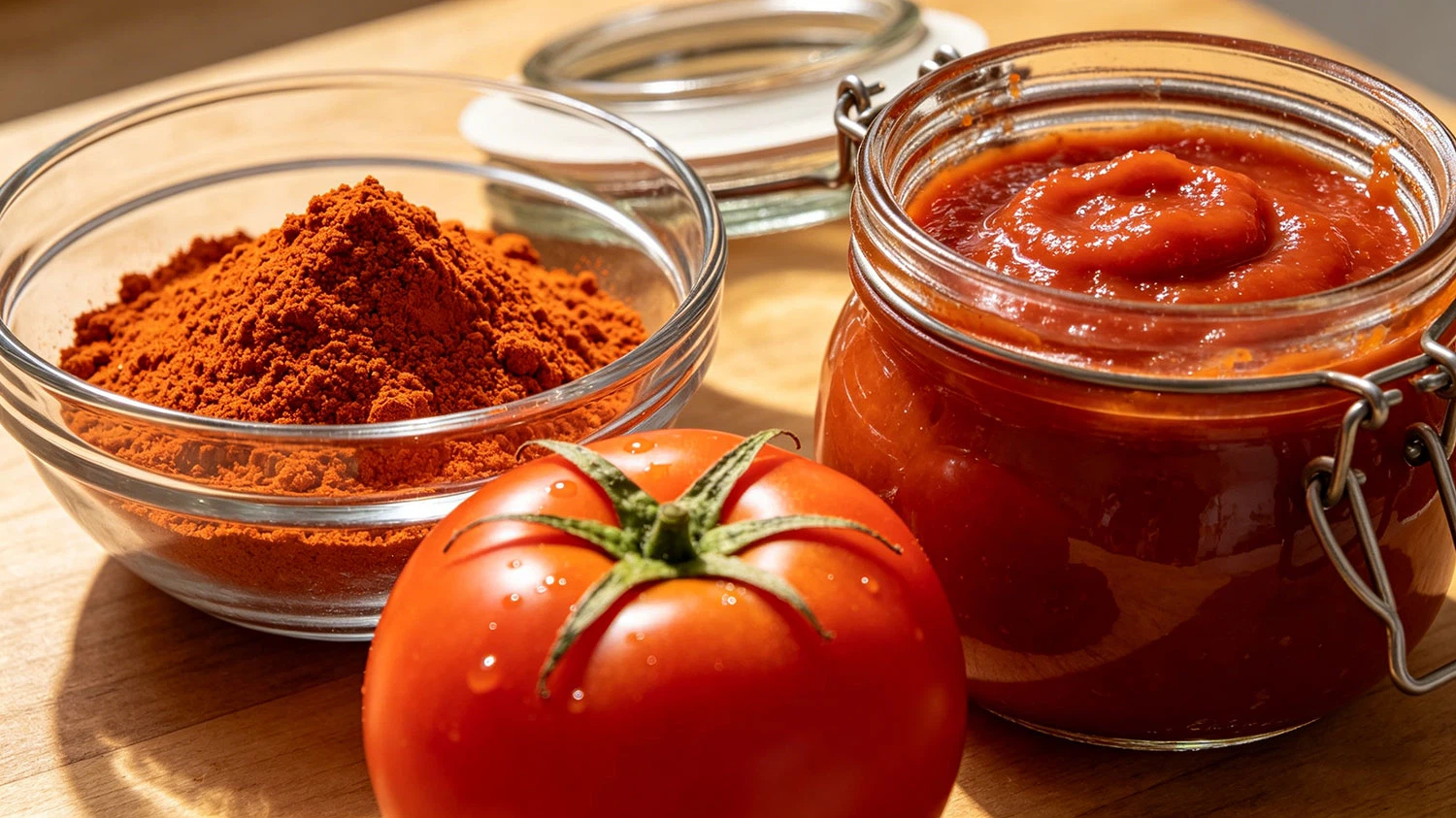
1. What Is Hot Break (HB) Tomato Powder?
In the Hot Break process, fresh tomatoes are rapidly heated to temperatures between 85°C and 102°C immediately after crushing.
The Science Of Viscosity
The primary goal of the Hot Break method is to deactivate pectinolytic enzymes (Polygalacturonase and Pectinmethylesterase) instantly. By "killing" these enzymes, the natural pectin in the tomato remains intact.
- Texture: High viscosity and thick consistency.
- Applications: Ideal for ketchup, thick sauces, and gravies where a heavy "mouthfeel" and high water-binding capacity are required.
- Color: Slightly darker red due to the higher heat exposure.
2. What Is Cold Break (CB) Tomato Powder?
The Cold Break process involves heating the crushed tomatoes to a lower temperature, usually between 65°C and 75°C.
Flavor And Color Retention
At these lower temperatures, the enzymes are not fully deactivated immediately. They are allowed to break down some of the pectin before the juice is eventually pasteurized and spray-dried.
- Texture: Lower viscosity and more fluid consistency.
- Flavor Profile: Superior "fresh tomato" aroma and a brighter, more vibrant red color.
- Applications: Perfect for tomato juice, instant soup bases, and snack seasonings where flowability and fresh color are more important than thickness.
3. Comparison Table: HB Vs. CB Tomato Powder
| Feature | Hot Break (HB) | Cold Break (CB) |
| Processing Temp | 85°C - 102°C | 65°C - 75°C |
| Enzyme Status | Completely Inactivated | Partially Active (initially) |
| Viscosity | High / Thick | Low / Fluid |
| Pectin Content | High (Preserved) | Low (Degraded) |
| Color | Deep Red / Maroon | Bright Red |
| Best For | Ketchup, Pizza Sauce | Juice, Soup, Seasoning |
4. Why The "Break" Matters For Your Formulation
Choosing the right bulk tomato powder is a balance of functional requirements:
- Reconstitution: If your product is an "instant" mix, CB powder often offers better dispersibility and a fresher look.
- Cost Efficiency: HB powder's high pectin content can sometimes reduce the need for added thickeners (like starch or gums) in your recipe, potentially lowering your total ingredient cost.
- Shelf Stability: As a professional tomato powder supplier, we ensure both types are spray-dried to a moisture level below 5%, ensuring a 24-month shelf life regardless of the break type.
5. Our Manufacturing Advantage
As a vertically integrated tomato powder manufacturer, we control the break process at the source. Our facility utilizes state-of-the-art evaporation and spray-drying technology to ensure that whether you choose Hot Break for its texture or Cold Break for its color, you receive a non-GMO, 100% pure product with no additives.
References & Technical Standards
- Gould, W. A. (2013). Tomato Production, Processing and Technology.
- Food and Agriculture Organization (FAO): Thermal Processing of Tomato Products.
- International Journal of Food Science: Effect of Break Temperature on Lycopene and Rheology.
Summary
In summary, the choice between Hot Break and Cold Break tomato powder hinges on your desired viscosity and sensory profile. Hot Break powder is the industry standard for thick, structural sauces due to its preserved pectin and high viscosity. Conversely, Cold Break powder is the preferred choice for applications requiring a bright aesthetic and a fresh, natural tomato flavor. As your dedicated wholesale partner, we provide both specifications to ensure your formulation meets the highest global standards.