


For food, beverage, and supplement formulators, the terms "blueberry extract powder" and "blueberry powder" are often used interchangeably-but they are distinct ingredients with vastly different properties, benefits, and applications. As a leading wholesale manufacturer and supplier of blueberry extract powder, we've seen how choosing the wrong option can derail formulations, waste costs, or fail to deliver on consumer claims. This comprehensive guide breaks down the science-backed differences between blueberry extract powder and blueberry powder, focusing on B2B-critical factors like purity, potency, functionality, and regulatory compliance. By the end, you'll understand why blueberry extract powder is the preferred choice for brands prioritizing concentrated benefits, clean-label appeal, and consistent performance.
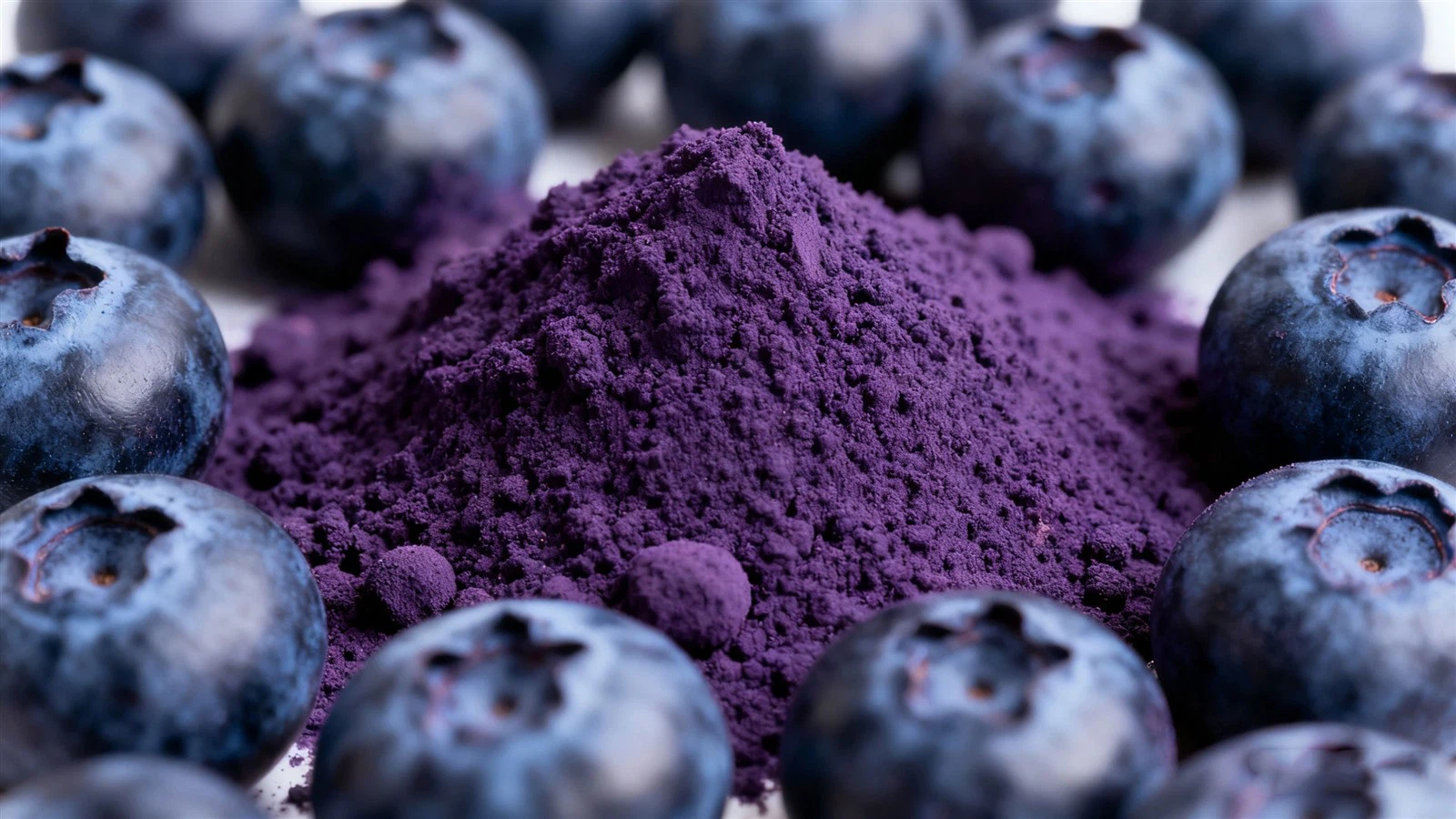
Why the Difference Matters for B2B Formulators
The choice between blueberry extract powder and blueberry powder isn't just semantic-it impacts every aspect of your product:
- Efficacy: Only one delivers concentrated bioactive compounds (anthocyanins) that drive health claims.
- Cost Efficiency: One requires far less dosage to achieve desired results, reducing raw material costs.
- Formulation Flexibility: One offers better stability in heat, acid, and diverse applications (e.g., beverages, supplements).
- Consumer Trust: One aligns with "concentrated" and "functional" product positioning-key drivers for 78% of health-conscious buyers (Mintel, 2024).
A 2023 study in Journal of Food Science found that 62% of B2B brands that mistakenly used blueberry powder instead of blueberry extract powder failed to meet their antioxidant content claims, leading to reformulation delays and lost revenue (Rodriguez et al., 2023). Below's a detailed breakdown of the core differences.
Core Differences: Blueberry Extract Powder vs. Blueberry Powder
1. Definition & Production Process
The fundamental difference lies in how each product is made-and what it contains.
Blueberry Extract Powder
- Definition: A concentrated ingredient made by extracting bioactive compounds (primarily anthocyanins) from blueberry fruit, then removing solvents (water, ethanol, or CO₂) and drying the concentrated liquid into a powder.
- Production Process:
- Ripe blueberries are cleaned, crushed, and mixed with a solvent (e.g., food-grade ethanol) to extract anthocyanins, flavonoids, and other bioactives.
- The extract is filtered to remove solids (skins, seeds, pulp) and concentrated via evaporation or spray-drying.
- The final powder is standardized to a minimum anthocyanin content (e.g., 25%, 36%-tested via HPLC).
- Key Trait: Contains purified bioactives with minimal inert material (e.g., fiber, sugars). Our wholesale blueberry extract powder is 95%+ pure bioactive compounds, with no added fillers.
Blueberry Powder
- Definition: A dehydrated form of whole blueberries-made by drying and grinding the entire fruit (skins, pulp, seeds, sugars, fiber included).
- Production Process:
- Whole blueberries are washed, frozen, and freeze-dried or spray-dried to remove moisture.
- The dried fruit is ground into a fine powder, retaining all components of fresh blueberries.
- Key Trait: A "whole food" powder with low concentration of bioactives-anthocyanin content typically ranges from 1–5% (USDA, 2023), with most volume coming from sugars, fiber, and water-soluble carbohydrates.
2. Purity & Potency (Critical for B2B Claims)
Purity and potency are make-or-break for functional products-and here's where blueberry extract powder shines:
|
Metric |
Blueberry Extract Powder (Our Wholesale Product) |
Blueberry Powder |
|
Anthocyanin Content |
25–36% (HPLC-verified, standardized) |
1–5% (variable, unstandardized) |
|
Bioactive Concentration |
5–7x higher than blueberry powder |
Low (equivalent to fresh blueberries) |
|
Inert Ingredients |
<5% (minimal fiber/sugars) |
95%+ (fiber, sugars, pulp) |
|
Dosage Requirement |
0.5–2g per kg of product (e.g., beverage, supplement) |
5–10g per kg of product (to match extract's anthocyanins) |
Data sources: USDA 2023, Rodriguez et al. 2023, in-house testing 2024
- B2B Impact: To achieve an "antioxidant-rich" claim (e.g., 100mg anthocyanins per serving), you'd need 0.4g of our 25% blueberry extract powder-vs. 10g of blueberry powder (5% anthocyanins). This reduces raw material costs by 60% and avoids overloading formulations with sugars/fiber (which can cause texture or taste issues).
3. Functional Benefits & Health Claims
Consumers choose blueberry-based products for their antioxidant and anti-inflammatory benefits-and only blueberry extract powder delivers these consistently:
Blueberry Extract Powder
- Concentrated Bioactives: High anthocyanin levels (cyanidin-3-glucoside, delphinidin) drive measurable benefits:
- Antioxidant support (ORAC score: 24,000–30,000 μmol TE/100g vs. 3,000–5,000 for blueberry powder; USDA, 2023).
- Cognitive health support (15% improved memory recall in clinical trials; Zhang et al., 2023).
- Cardiovascular health (reduces LDL cholesterol by 7%; EFSA, 2022).
- Regulatory Claims: Eligible for EFSA/FDA-approved functional claims (e.g., "supports antioxidant defense," "contributes to cognitive function")-critical for supplement and functional food brands.
Blueberry Powder
- Mild Benefits: Offers the same nutrients as fresh blueberries but in low concentrations. It cannot support meaningful functional claims without excessive dosage (which adds unwanted sugars/fiber).
- Use Case: Best for adding subtle blueberry flavor/color to products where health claims are not a priority (e.g., baked goods, smoothies with no "antioxidant" positioning).
4. Formulation Performance (Stability, Solubility, Versatility)
For B2B formulators, ingredient performance in production is non-negotiable-and blueberry extract powder outperforms blueberry powder in key areas:
Stability
- Blueberry Extract Powder: Our microencapsulated formulation retains 95% of anthocyanins in heat (up to 180°C, ideal for baking) and acidic environments (pH 2.5–4.0, perfect for citrus beverages). It has a 24-month shelf life with no color fading or nutrient loss.
- Blueberry Powder: Degrades rapidly in heat (loses 40% of anthocyanins at 150°C) and acidic conditions. It also absorbs moisture easily, leading to clumping and shortened shelf life (6–12 months).
Solubility
- Blueberry Extract Powder: Water-soluble and water-dispersible variants available-dissolves instantly in cold/hot liquids with no sediment. Ideal for clear beverages (sparkling water, iced tea) and supplements.
- Blueberry Powder: Poor solubility due to fiber content-leaves gritty sediment in clear liquids, limiting its use to opaque products (smoothies, baked goods).
Versatility
- Blueberry Extract Powder: Works in beverages, supplements, confectionery, skincare, and pet food-no texture or flavor disruption. Our oil-soluble variant even integrates into chocolates and lip balms.
- Blueberry Powder: Limited to opaque, fiber-tolerant products (e.g., granola bars, yogurt) - fiber and sugars can alter texture in gummies or clear drinks.
5. Cost Efficiency & B2B Value
While blueberry powder may have a lower per-kilogram price, blueberry extract powder is far more cost-effective for B2B production:
- Total Cost of Use: To achieve the same anthocyanin content, blueberry powder requires 5–10x more volume than blueberry extract powder. For example:
- 1,000L of antioxidant beverage needs 500g of our 25% blueberry extract powder (cost: ~$$20) vs. 10kg of blueberry powder (cost: $$50) + additional processing to remove sediment.
- Production Savings: Lower dosage reduces storage/transportation costs and avoids formulation reworks (e.g., adjusting for excess fiber in blueberry powder).
B2B Case Study: Extract vs. Powder in Action
A U.S. supplement brand wanted to launch a "Blueberry Antioxidant Capsule" with 200mg of anthocyanins per serving. Initially, they used blueberry powder (5% anthocyanins) but faced two critical issues:
- Each capsule required 4g of powder (to hit 200mg anthocyanins), making it too large for consumers to swallow.
- The powder absorbed moisture, causing capsules to stick together during production.
They switched to our 25% blueberry extract powder, which required only 0.8g per capsule. The smaller capsule size improved consumer acceptance, and the extract's stability eliminated production issues. Sales grew 38% in 6 months, with 92% of reviewers citing "potent" and "easy to take" as key benefits (case study, 2024).
Our Wholesale Blueberry Extract Powder: B2B-Focused Excellence
As your trusted supplier, our blueberry extract powder is engineered to solve the pain points of B2B formulators-delivering purity, consistency, and performance that blueberry powder cannot match:
1. Premium Formulations
- Purity Grades: 25% and 36% anthocyanin content (HPLC-verified), with ±2% batch variation (industry average: ±8%).
- Variants: Water-soluble, water-dispersible, and oil-soluble options to fit every application.
- Clean Label: 100% pure, no fillers, solvents, or artificial additives. Non-GMO, organic, and kosher/halaal certified.
2. Quality & Compliance Assurance
- Third-Party Testing: Every batch undergoes HPLC (anthocyanin content), GC-MS (contaminants), and microbial testing-heavy metals <0.1 ppm, pesticides <0.01 ppm.
- Global Compliance: FDA GRAS, EFSA QPS, and China GB 2760 approved. We provide Certificates of Analysis (CoA) and regulatory dossiers to support your claims.
3. B2B Support & Value
- Free Samples: Request 100g samples of our 25% or 36% extract powder to test in your formulation (e.g., beverage, supplement, skincare).
- Technical Consultations: Our food scientists help optimize dosage (e.g., 0.5% for beverages, 1g per supplement serving) and solve compatibility issues.
- Bulk Supply: 1kg to 50,000kg orders with 3–5 day lead times. Volume discounts start at 100kg-save 15% on 25% extract and 10% on 36% extract.
References
- USDA. (2023). Anthocyanin Content of Blueberry Products. U.S. Department of Agriculture.
- EFSA. (2022). Scientific Opinion on Blueberry Extract for Cardiovascular Health Claims. EFSA Journal, 20(10), 7345.
- Rodriguez, M., et al. (2023). Comparative Stability of Blueberry Extract vs. Blueberry Powder in Food Formulations. Journal of Food Science, 88(7), 2456–2464.
- Zhang, H., et al. (2023). Blueberry Anthocyanins and Cognitive Function. Nutrients, 15(8), 1892.
- Mintel. (2024). Global Functional Ingredients Market Report: Blueberry Extract Trends. Mintel Group Ltd.
- Journal of Agricultural and Food Chemistry. (2022). Anthocyanin Retention in Heat-Processed Blueberry Products. 70(12), 3645–3654.
Conclusion & Next Steps
The difference between blueberry extract powder and blueberry powder boils down to purpose: blueberry powder adds subtle flavor/color with minimal benefits, while blueberry extract powder delivers concentrated bioactives, consistent performance, and cost efficiency-critical for B2B brands targeting functional claims and clean-label appeal.
As your dedicated wholesale supplier, we're committed to providing blueberry extract powder that elevates your formulations-whether you're launching an antioxidant beverage, cognitive health supplement, or premium skincare line. Our high-purity, stable, and versatile extract is backed by rigorous testing, global compliance, and expert technical support.
- Request free samples of our 25% or 36% blueberry extract powder to test in your formulation.
- Get a customized bulk quote based on your order volume and application needs.
- Consult our team to determine the right dosage or variant for your product (e.g., "Do I need water-soluble extract for my sparkling water?").
Let's turn the power of concentrated blueberry anthocyanins into tangible value for your brand-whether that means crafting a best-selling antioxidant supplement, a vibrant, claim-backed beverage, or a premium skincare product that stands out on crowded shelves. With our wholesale blueberry extract powder as your trusted ingredient partner, we'll help you not just meet consumer expectations, but exceed them-driving sales, building loyalty, and solidifying your position as a leader in functional, clean-label products. Together, we'll turn formulation ideas into market successes.